
Tool guide
Which wheel calculator do you need?
Offset, tire size and fitment are related, but they answer different questions. Using the wrong calculator is how a wheel ends up looking right in a photo and sitting wrong on the car.
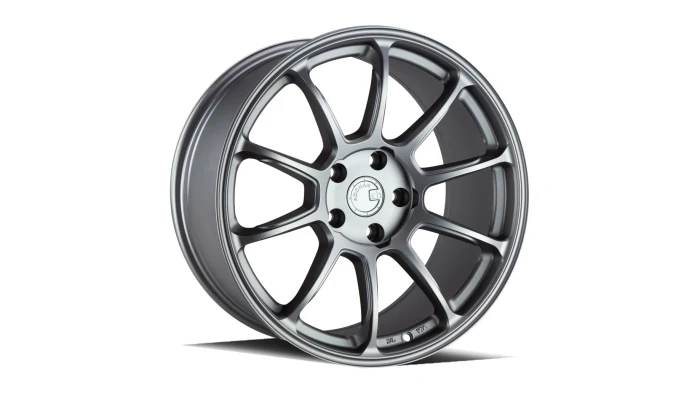
Start with the question, not the tool
A wheel change usually starts with a look: a wider lip, a different finish, a set that fills the arches better. The look is the easy part. The hard part is turning it into numbers that the car will accept.
There are three separate questions. A tire size question is about height and gearing. An offset question is about where the wheel sits. A fitment question is about the complete package: wheel, tire, position and overall diameter together.
| Calculator | Question it answers | Main inputs |
|---|---|---|
| Tire size | How tall is this tire, and how does it compare with another size? | Tire width, aspect ratio, wheel diameter |
| Offset | Where does this wheel sit, and what does a spacer change? | Wheel width, ET, spacer |
| Fitment | How does this complete wheel and tire package compare with the current one? | Old and new wheel and tire dimensions |
Use the tire size calculator when height is the question
Use the tire size calculator when the wheel is staying the same, or when you already know the wheel diameter and only need to compare tires. It converts a size such as 225/45R17 into an overall diameter, then compares it with another size.
A 225/45R17 is 634.3 mm tall. A 235/40R18 is 645.2 mm tall: 10.9 mm more diameter, or about 1.7%. That changes the speedometer and the gearing, even if the wheel looks similar. The calculator also shows circumference, revolutions per mile and the actual speed at an indicated 30 or 60 mph.
Use the offset calculator when position is the question
Use the offset calculator when you know the wheel width and ET and need to understand the wheel itself. Backspacing is the distance from the mounting face to the inner lip. Front spacing is the distance from the mounting face to the outer lip. A spacer moves the whole wheel outward and lowers the effective offset; it does not change the wheel backspacing or front spacing.
For example, an 8.5-inch wheel with ET45 has 152.95 mm of backspace and 62.95 mm of front spacing. Add a 10 mm spacer and the effective offset becomes ET35, but the wheel dimensions stay the same. The spacer changes where the wheel sits on the hub, not the wheel itself.
Use the fitment calculator when the whole package changes
Use the fitment calculator when you are comparing a complete new wheel and tire package with the current setup. It combines the wheel width, offset, diameter and tire size, then shows how the outer rim, inner rim, backspacing and overall diameter move.
Take a 17×7.5 ET45 wheel with 225/45R17 tires and compare it with an 18×8.5 ET40 wheel with 235/40R18 tires. The new outer rim sits 17.7 mm further out, the inner rim sits 7.7 mm further in, backspace increases by 7.7 mm, and the tire is 10.9 mm taller. Those numbers describe the change; they do not approve it.
| Measurement | Change |
|---|---|
| Outer rim | +17.7 mm outward |
| Inner rim | +7.7 mm inward |
| Backspace | +7.7 mm |
| Overall diameter | +10.9 mm |
| Speedometer | +1.72% (reads low) |
What none of the calculators can tell you
The calculators work from the numbers you enter. They do not measure brake calipers, suspension components, fender shape or tire stretch. They do not confirm load rating, lug hardware or whether the tire model runs wider than its nominal size.
A result can be mathematically correct and still fail on the car. Treat the calculator as a way to narrow the choice and spot an obviously aggressive setup, then check clearance and hardware before ordering.
Do not use a wheel or tire setup that has not been checked for clearance and load rating. A photo preview and a dimensional calculation answer different questions from a physical test fit.
A sensible order
Start with the tire size if the tire is the main change. Use the offset calculator if the wheel width or ET is the main change. Use the fitment calculator when both are changing and you need to see the complete package.
If the result is close to the current setup but not identical, measure the car before ordering. If it is far outside the original range, change one number at a time rather than trying to correct several problems at once.
- Write down the current setupWheel diameter, width, offset, tire width and aspect ratio. Include the tire size from the sidewall, not the wheel diameter alone.
- Choose the right calculatorTire height, wheel position or the complete package. Do not use the offset calculator to answer a tire diameter question.
- Read the direction, not only the numberA positive outer rim number means outward. A positive inner rim number means inward. A positive speedometer error means the speedometer reads low.
- Verify the carCheck brakes, suspension, fenders, load rating and hardware before buying. The calculator is the first filter, not the final approval.
Questions
Which wheel calculator should I use first?
Start with the part that changes most. If the tire size changes, use the tire size calculator. If the wheel width or offset changes, use the offset calculator. If both change, use the fitment calculator for the complete comparison.
Can the offset calculator tell me if a tire will fit?
No. It describes wheel position, backspacing and front spacing. Tire diameter and clearance need the tire size calculator and a physical check.
Do these calculators guarantee fitment?
No. They show dimensional changes. Brake clearance, suspension clearance, fender clearance, load rating and hardware still need to be checked for the exact car.
See a wheel on your own car before you buy it.
Get started